
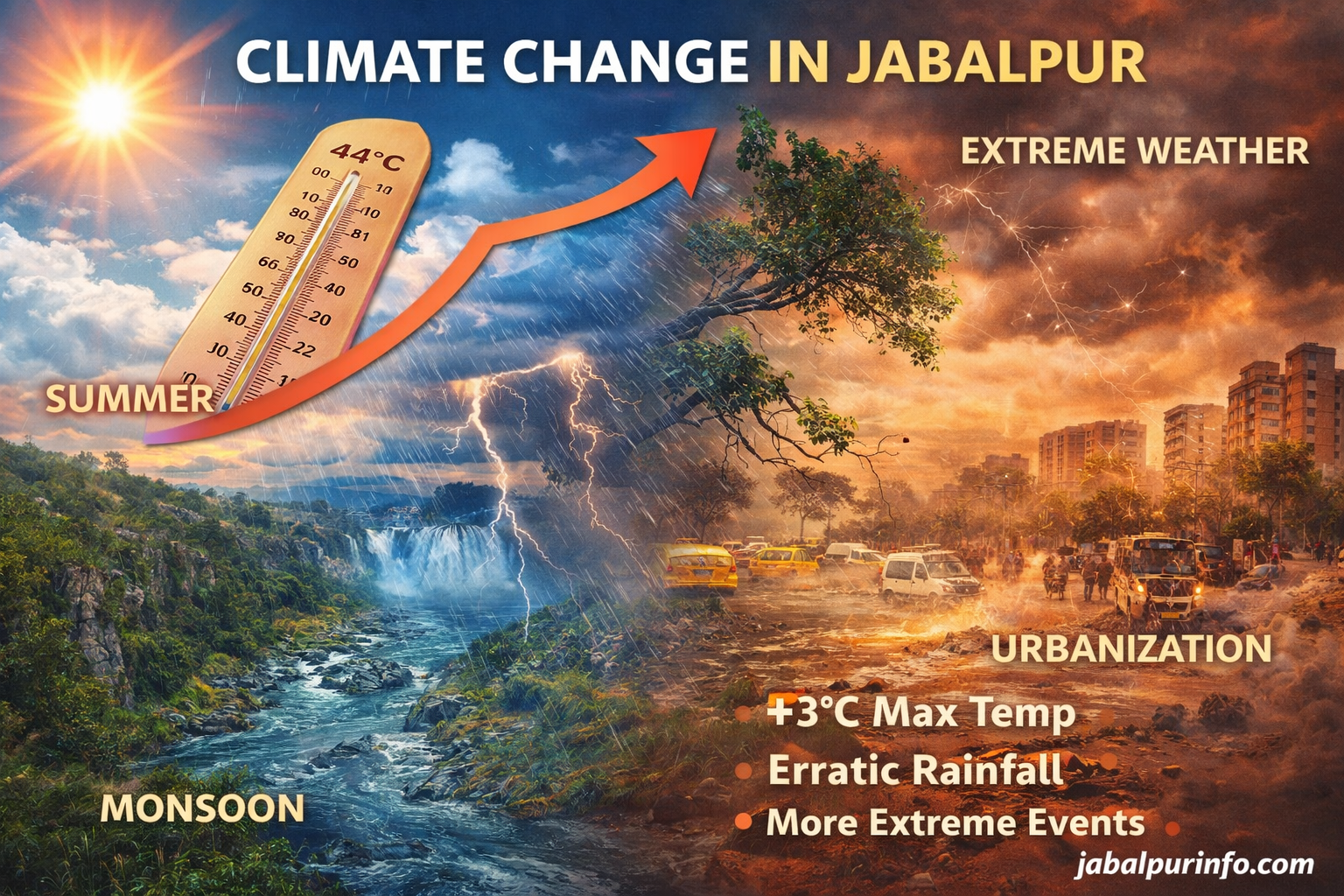
Jabalpur, often celebrated for its marble landscapes and the serene Narmada River, also tells an important environmental story through its climate. Over the past two decades, the Jabalpur climate has shown noticeable shifts—subtle in some areas, dramatic in others. From rising summer temperatures to unpredictable monsoons, climate change in Jabalpur is no longer just a global concept—it is a local reality.
In this detailed guide, we explore the traditional climate patterns of Jabalpur and analyze Jabalpur weather trends over the last 20 years (2004–2024), helping you understand how the city’s environment is evolving.
Overview of Jabalpur Climate
Jabalpur falls under a tropical wet and dry climate, typical of central India and the broader Madhya Pradesh climate zone.
Key Climate Characteristics
- Summers: Hot and dry (March to June)
- Monsoon: Humid and rainy (late June to September)
- Winters: Mild and pleasant (November to February)
Average Climate Data (Long-Term Patterns)
- Summer Temperature Jabalpur: 35°C to 45°C
- Winter Temperature: 8°C to 25°C
- Annual Rainfall Jabalpur: ~1,200–1,400 mm
- Peak Monsoon Months: July and August
The presence of the Narmada River and surrounding forests has historically moderated extreme conditions, making Jabalpur more comfortable than many other central Indian cities.
Seasonal Breakdown of Jabalpur Weather
Summer (March–June)
Summers in Jabalpur are intense and increasingly prolonged.
- Day temperatures frequently exceed 42°C
- Heatwaves have become more frequent in recent years
- Dry winds (loo) dominate afternoons
Over time, summers have started earlier (late February) and extended into June.
Monsoon (June–September)
The monsoon in Jabalpur is crucial for agriculture and water supply.
- Heavy rainfall in July–August
- Occasional flooding near riverbanks
- High humidity levels
However, rainfall distribution has become erratic in recent years.
Winter (November–February)
Winters remain the most stable season.
- Pleasant daytime temperatures (~20–25°C)
- Cold nights (~8–12°C)
- Occasional fog in early mornings
Compared to summers and monsoons, winter changes are less pronounced.
Jabalpur Weather Trends (2004–2024)
Over the last 20 years, Jabalpur weather trends indicate clear signs of climate change. Based on available weather records and observed patterns, several shifts stand out.
1. Rising Temperatures in Jabalpur
One of the most noticeable changes is the increase in average temperatures.
Observed Trends:
- Average summer temperatures have increased by 1°C to 1.5°C
- More frequent days above 44°C
- Warmer nights, reducing cooling relief
Key Insights:
- Heatwaves are now more intense and longer-lasting
- Urban areas experience higher temperatures due to the heat island effect
2. Changing Rainfall Patterns
The rainfall Jabalpur pattern has become increasingly unpredictable.
Observed Changes:
- Total annual rainfall remains similar, but distribution has changed
- Short bursts of heavy rain instead of steady showers
- Delayed onset or early withdrawal of monsoon
Impacts:
- Flash flooding in low-lying areas
- Agricultural uncertainty in surrounding districts
- Water storage challenges
3. Increasing Extreme Weather Events
Extreme weather events have become more frequent.
Examples:
- Sudden thunderstorms and strong winds
- Unseasonal rainfall during winter months
- Occasional hailstorms
These events disrupt daily life and indicate broader climatic instability.
4. Urbanization and Microclimate Changes
Rapid urban growth has altered the local climate.
Key Factors:
- Reduction in green cover
- Expansion of concrete infrastructure
- Increased vehicle emissions
Effects:
- Higher local temperatures in city areas
- Reduced natural cooling
- Increased air pollution levels
Key Climate Data Comparison (2004 vs 2024)
Temperature Trends
- 2004 Average Summer Peak: ~41°C
- 2024 Average Summer Peak: ~43–44°C
Rainfall Trends
- Earlier Pattern: Consistent monsoon spread over 3–4 months
- Current Pattern: Intense rainfall concentrated in fewer days
Winter Trends
- Slight increase in minimum temperatures
- Reduced duration of cold spells
These changes highlight a gradual but steady transformation in the Jabalpur climate.
Causes of Climate Change in Jabalpur
Several factors contribute to climate change Jabalpur:
Global Factors
- Rising global temperatures
- Changing atmospheric circulation
- Increased greenhouse gas emissions
Local Factors
- Deforestation in surrounding areas
- Urban expansion and construction
- Pollution from vehicles and industries
The combination of global and local influences amplifies climate shifts.
Impact of Climate Change on Jabalpur
Environmental Impact
- Reduced groundwater levels
- Stress on the Narmada River ecosystem
- Loss of biodiversity in nearby forests
Agricultural Impact
- Crop yield variability
- Increased dependence on irrigation
- Risk of crop failure due to erratic monsoons
Urban Impact
- Increased heat stress in summer
- Water shortages during delayed monsoons
- Infrastructure strain during heavy rains
Health Impact
- Rise in heat-related illnesses
- Increase in respiratory issues
- Spread of seasonal diseases due to humidity changes
How Jabalpur is Adapting
Despite challenges, efforts are being made to adapt to changing climate conditions.
Government & Civic Initiatives
- Tree plantation drives
- Smart city projects focusing on sustainability
- Water conservation programs
Community Actions
- Rainwater harvesting in homes
- Awareness about energy conservation
- Local environmental campaigns
These steps aim to reduce the long-term impact of climate change.
Future Climate Outlook for Jabalpur
Looking ahead, climate models suggest:
- Continued rise in temperatures
- Increased variability in rainfall
- Greater frequency of extreme weather events
However, proactive measures can help mitigate these risks.
Tips for Residents & Visitors
For Residents:
- Use water-saving techniques
- Increase green cover around homes
- Stay updated on weather alerts
For Visitors:
- Avoid peak summer months (April–June)
- Best time to visit: October to February
- Carry hydration and sun protection during warmer months
Conclusion: A Changing Climate, A Resilient City
The story of climate change in Jabalpur is one of gradual transformation. While the city still retains its natural charm and moderate climate, the signs of change are clear—hotter summers, unpredictable monsoons, and evolving weather patterns.
Understanding the Jabalpur climate today is essential not just for planning travel, but for protecting the city’s future. As Sanskardhani continues to grow, balancing development with environmental sustainability will be key.
Jabalpur stands at a crossroads—but with awareness and action, it can remain a city where nature and culture thrive together.




Leave a Reply