
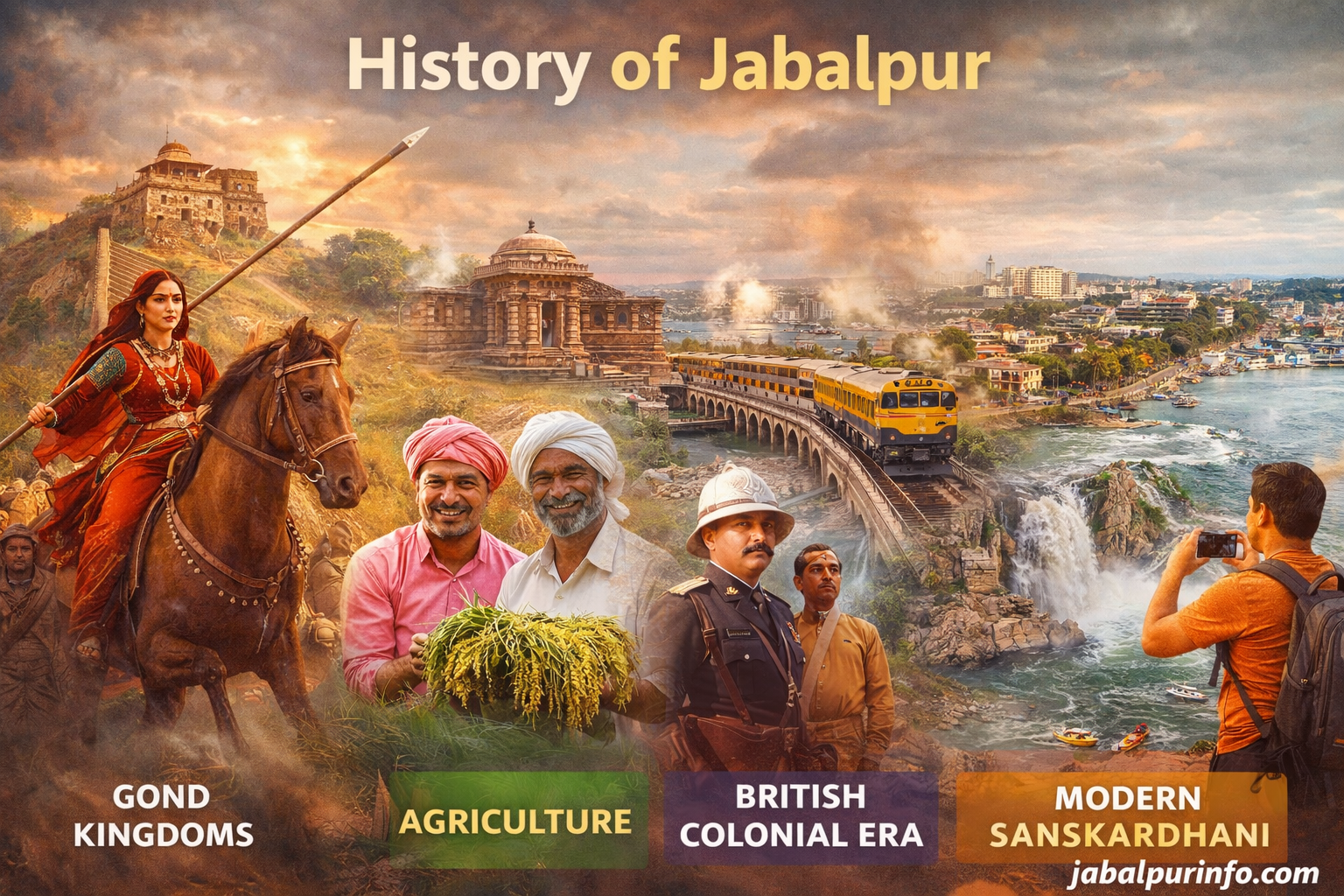
Jabalpur, often called Sanskardhani (the cultural capital of Madhya Pradesh), is a city where history whispers through marble cliffs, ancient forts, and sacred ghats. The history of Jabalpur is not just a timeline of rulers and battles—it is a layered story of tribal heritage, warrior queens, colonial transformation, and modern evolution.
In this comprehensive and SEO-friendly guide, we explore the fascinating Jabalpur history, uncovering lesser-known facts, cultural shifts, and defining moments that shaped the city into what it is today.
Origins of Jabalpur: Ancient Roots and Early Settlements
The origins of Jabalpur date back thousands of years, long before it became a prominent urban center.
Ancient Name and Geography
- Jabalpur was historically known as Jubbulpore during British times
- The region lies along the sacred Narmada River, one of India’s oldest rivers
- Archaeological findings suggest early human settlements in the Narmada valley
The fertile land and river proximity made it an ideal location for early civilizations.
Gondwana Era: The Foundation of Jabalpur’s Identity
One of the most defining chapters in the history of Jabalpur is its association with the Gond kingdom.
Rise of the Gond Dynasty
- Jabalpur was part of the Garha-Katanga kingdom
- Ruled by the Gond tribe, one of central India’s largest tribal communities
- The kingdom flourished between the 14th and 16th centuries
Legacy of Rani Durgavati
The most iconic figure in Jabalpur history is Rani Durgavati.
- A brave queen known for her resistance against Mughal expansion
- Fought valiantly against Emperor Akbar’s forces in 1564
- Chose martyrdom over surrender
Historical Significance:
- Symbol of courage and self-respect
- Strengthened regional identity
- Inspired generations in Madhya Pradesh
Her legacy still resonates in local culture and annual commemorations.
Mughal and Maratha Influence
After the fall of the Gond kingdom, Jabalpur came under successive powers.
Mughal Rule
- Became part of the Mughal Empire after Rani Durgavati’s defeat
- Administrative changes introduced
- Limited cultural transformation compared to other regions
Maratha Period
- In the 18th century, Jabalpur came under Maratha control
- Increased trade and revenue systems
- Strengthening of regional administration
This period laid the groundwork for economic activity in the region.
British Era: Transformation into Jubbulpore
The British colonial period brought major changes to the history of Jabalpur city.
Administrative and Military Importance
- Jabalpur became a key British administrative center
- Establishment of cantonment areas
- Development of civil lines and infrastructure
Railway and Industrial Growth
- Introduction of railways connected Jabalpur to major cities
- Growth of trade and commerce
- Early industrial activities began
Cultural Shifts
- Western education institutions were established
- Emergence of a new urban middle class
The British era transformed Jabalpur from a regional town into a structured city.
Post-Independence Era: Growth and Modernization
After India’s independence in 1947, Jabalpur entered a new phase of development.
Key Developments
- Establishment of the Madhya Pradesh High Court
- Expansion of defense industries (ordnance factories)
- Growth of educational institutions
Urban Expansion
- Development of residential colonies
- Rise of markets and commercial areas
- Improvement in transportation and infrastructure
This period marked the beginning of modern Jabalpur development history.
Cultural Evolution: Why Jabalpur is Called Sanskardhani
Jabalpur earned the title Sanskardhani due to its rich cultural heritage.
Cultural Highlights
- Blend of tribal, Maratha, and colonial influences
- Strong tradition of literature, music, and arts
- Celebrations of festivals with unique local flavor
Role of the Narmada River
The Narmada River plays a central role in cultural life.
- Religious rituals and festivals
- Ghats as social and spiritual hubs
- Influence on local traditions and beliefs
The river is not just a geographical feature—it is a cultural lifeline.
Historical Landmarks of Jabalpur
Exploring the history of Jabalpur is incomplete without its iconic landmarks.
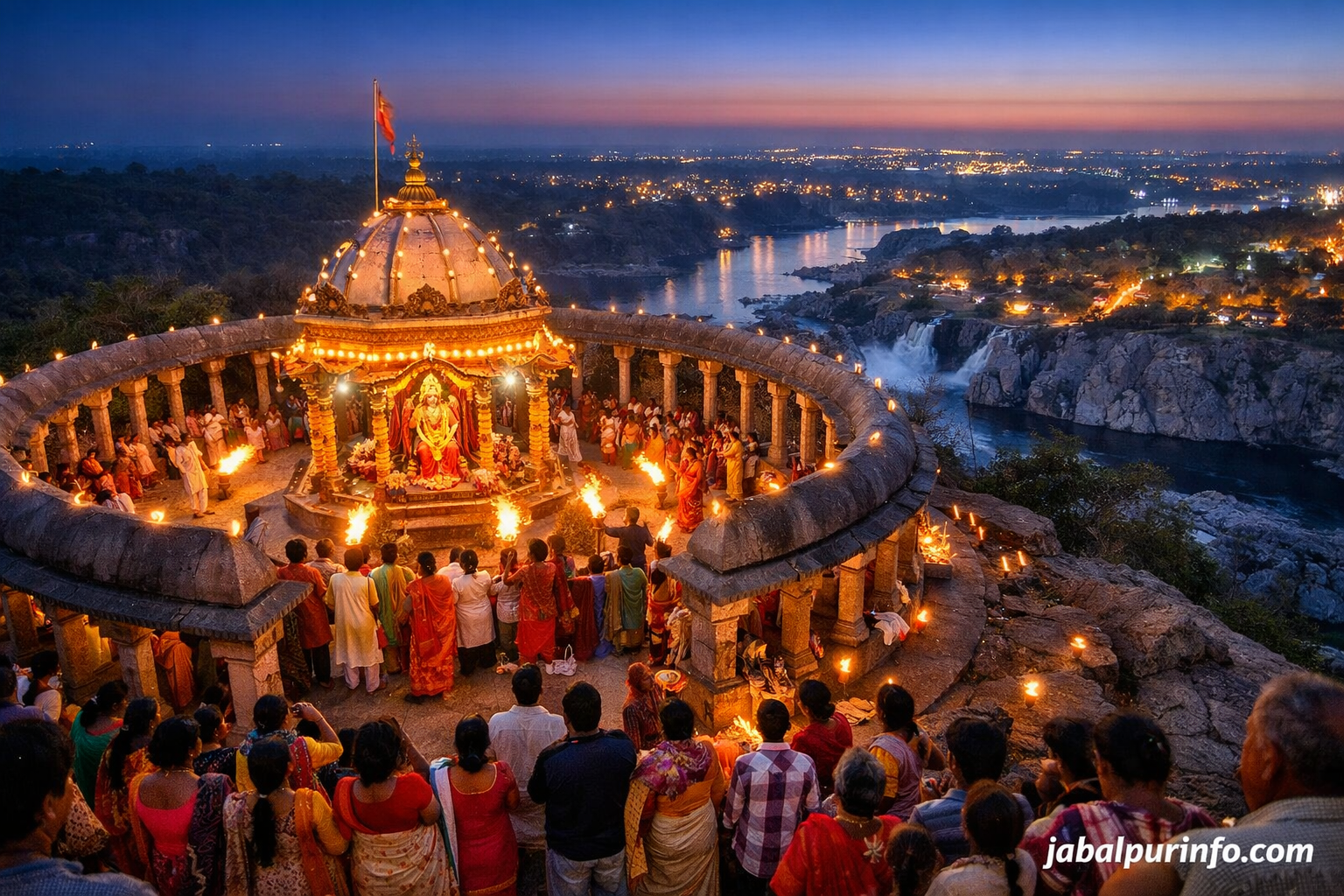
1. Madan Mahal Fort
- Built by the Gond rulers
- Served as a strategic military outpost
- Offers panoramic views of the city
2. Chausath Yogini Temple
- 10th-century temple near Bhedaghat
- Dedicated to 64 yoginis
- Unique circular architecture
3. Bhedaghat and Marble Rocks
- Natural marble formations along the Narmada
- Historically significant trade and cultural site
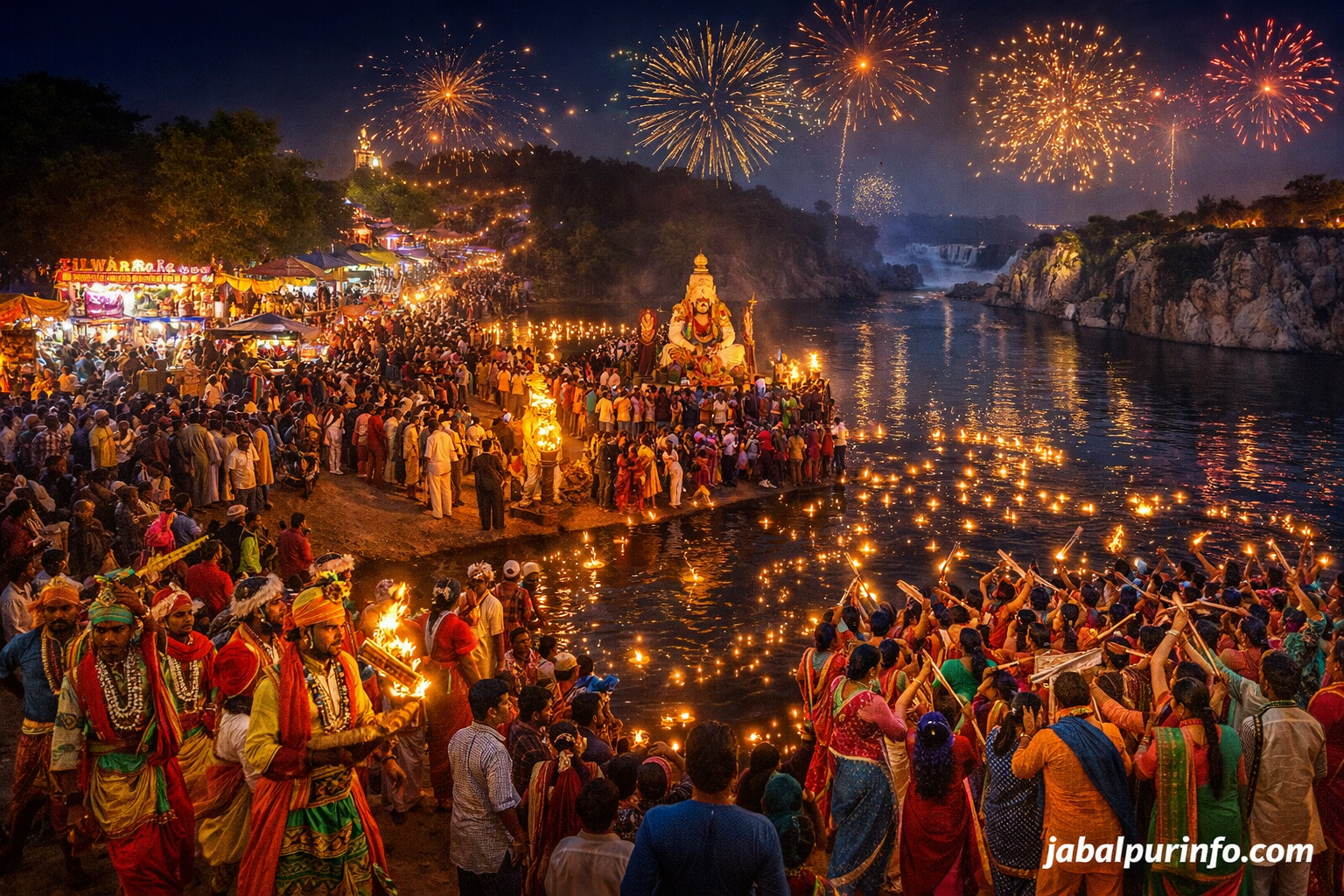
4. Tilwara Ghat
- Associated with Mahatma Gandhi’s ashes immersion
- Important historical and spiritual location
These sites reflect different layers of Jabalpur’s past.
Lesser-Known Historical Insights
To truly understand the Jabalpur history, one must explore beyond textbooks.
Hidden Facts
- The region was once a hub for stone carving and marble trade
- Tribal communities played a major role in shaping early governance
- British-era buildings still exist in civil lines areas
Local Oral Traditions
- Stories of Rani Durgavati passed down generations
- Folklore connected to the Narmada River
- Tribal myths and legends still alive in nearby villages
These elements add depth to Jabalpur’s historical narrative.
Economic and Strategic Importance Through History
Jabalpur’s location has always been its strength.
Key Advantages
- Central position in India
- Proximity to forest and mineral resources
- Connectivity through rail and road networks
These factors contributed to its continuous growth across centuries.
Jabalpur in the 21st Century: A Blend of Past and Future
Today, Jabalpur stands as a city that balances heritage with modernity.
Modern Identity
- Smart city initiatives
- Growing education and healthcare sectors
- Expanding urban infrastructure
Preserving Heritage
- Restoration of historical sites
- Promotion of tourism
- Cultural festivals celebrating history
The city continues to evolve while honoring its roots.
Conclusion: The Living Legacy of Jabalpur
The history of Jabalpur is not confined to monuments or dates—it lives in its people, traditions, and everyday life. From the bravery of Rani Durgavati to the colonial transformations and modern growth, every era has left its mark.
What makes Jabalpur unique is its ability to carry its past forward without losing its identity. It is a city where history is not just remembered—it is experienced.
Whether you are a history enthusiast, traveler, or curious reader, exploring Jabalpur history offers a journey through time—rich, inspiring, and unforgettable.



Leave a Reply