Introduction
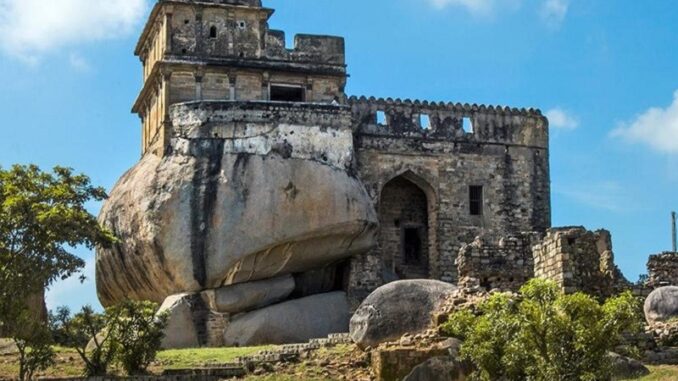
Perched atop a rugged rocky hill, Madan Mahal Fort stands as one of the most iconic historical landmarks of Jabalpur. This ancient fort, though modest in size, carries immense historical and cultural significance, reflecting the rich heritage of the region. Its elevated position not only offers stunning panoramic views of the surrounding landscape but also highlights its original purpose as a strategic military outpost.
The fort is widely admired for its unique architectural style, which blends simplicity with strength. Built using local stone and designed to suit the natural terrain, it showcases the practical ingenuity of the era in which it was constructed. Unlike grand palaces, Madan Mahal Fort was primarily used as a watchtower and defense structure, emphasizing functionality over luxury.
Deeply connected to the history of the Gond kingdom, the fort is often associated with the legendary queen Rani Durgavati, who played a crucial role in defending her territory against external invasions. As such, Madan Mahal Fort is not just an architectural marvel but also a symbol of bravery, resilience, and the enduring legacy of regional history in central India.
Historical Background
- Construction period (11th–12th century origins, later Gond rule developments)
- Association with the Gond rulers
- Strategic importance as a watchtower and military post
Connection with Rani Durgavati
- Madan Mahal Fort played an important role during the reign of Rani Durgavati, serving as a strategic point in her kingdom rather than a royal residence.
- The fort was primarily used as a military outpost and watchtower, helping monitor enemy movements due to its elevated hilltop location overlooking Jabalpur and surrounding areas.
- It functioned as a defensive structure, allowing soldiers to guard the region and communicate signals across distances, which was crucial for protecting the Gond kingdom.
- Rani Durgavati is remembered for her exceptional bravery and leadership, as she fiercely resisted the expansion of the Mughal Empire under Emperor Akbar.
- Her resistance is most notably associated with the Battle of Narrai, where she fought valiantly against the Mughal forces despite being outnumbered.
- Even in the face of defeat, she chose honor over surrender, becoming a symbol of courage and sacrifice in Indian history.
- Today, the fort stands as a reminder of her legacy and the valor of the Gond rulers who defended their land with determination.
Architectural Features
- Unique hilltop construction using local stones
- Compact yet strong defensive design
- Watchtowers, war rooms, and secret passages (if applicable)
- Balance between simplicity and functionality
Strategic Importance
- Elevated location offering panoramic views
- Surveillance over surrounding regions
- Role in defense and communication
- Importance in protecting the Gond kingdom
Legends and Myths of Madan Mahal Fort
- Local legends suggest that the fort hides secret treasures believed to have been stored by the Gond rulers during times of conflict to protect their wealth from invaders.
- Many residents believe that hidden chambers and vaults still exist within the fort परिसर, though no confirmed discoveries have been made.
- Folklore speaks of a network of underground tunnels connecting the fort to distant locations around Jabalpur, possibly used for escape routes or secret military movements.
- Some stories claim these tunnels extended toward nearby hills and important locations, helping rulers and सैनिक move safely during attacks.
- Generations of locals have passed down tales of mysterious passages and sealed pathways, adding an element of intrigue and mystery to the fort.
- Cultural narratives often describe the fort as a place of hidden secrets and untold stories, blending history with imagination.
- These myths and legends continue to attract visitors, making the fort not just a historical site but also a place of curiosity and folklore.
Present-Day Significance
- Popular tourist attraction in Jabalpur
- Historical education and cultural identity
- Photography and trekking spot
- Maintenance and preservation efforts
Best Time to Visit
- Ideal months (October–March)
- Sunrise and sunset views
- Weather considerations
How to Reach
- Accessibility from different parts of Jabalpur
- Road connectivity and local transport options
- Nearby landmarks like Balancing Rock
Travel Tips
- Wear comfortable footwear for climbing
- Carry water and essentials
- Visit during daylight hours
- Respect heritage site rules
In conclusion, Madan Mahal Fort stands as a timeless symbol of history, bravery, and architectural ingenuity.It continues to preserve the legacy of Rani Durgavati while captivating visitors with its rich heritage and enduring mysteries.