

Introduction
The first thing you notice at Dhuandhar Falls isn’t the sight—it’s the sound. A deep, thunderous roar echoes through the marble घाटs as the Narmada River crashes down with unbelievable force. Within seconds, you’re surrounded by a cloud of mist so dense it feels like smoke—giving the falls its name, Dhuan-dhar (meaning “smoke cascade”).
If you’re planning a visit in 2026, understanding Dhuandhar Falls timing and choosing the right season can completely transform your experience. Located in Bhedaghat, this natural wonder is one of the most dramatic waterfalls in India. But here’s the secret: the way it looks in monsoon vs winter is like visiting two different places.
This detailed guide will help you plan everything—from exact timings and Dhuandhar Falls entry fee 2026 to ropeway prices, best photography hours, and insider tips only locals know.
What is Dhuandhar Falls? History & Unique Facts
Dhuandhar Falls is where the Narmada River narrows dramatically and plunges down from a height of about 30 meters. The result? A powerful waterfall that creates a smoky mist cloud visible from afar.
Unique Facts:
- The “smoke effect” comes from high-pressure water droplets scattering light
- Surrounded by ancient marble rock formations shaped over millions of years
- Nearby fossil beds (Lamheta region) suggest prehistoric activity
- Considered sacred—locals often perform rituals nearby
2026 Insight:
MP Tourism has enhanced viewing platforms and eco-barriers, making the experience safer without disturbing the natural flow.
Dhuandhar Falls Timing & Opening Hours 2026
Planning around Dhuandhar Falls timing is crucial.
General Timings:
- Open: 6:00 AM – 8:00 PM (daily)
- Best visiting hours: 7:00–10:00 AM and 4:30–6:30 PM
Ropeway / Cable Car Timing:
- Operational: 9:00 AM – 6:00 PM
- Last ride: Around sunset
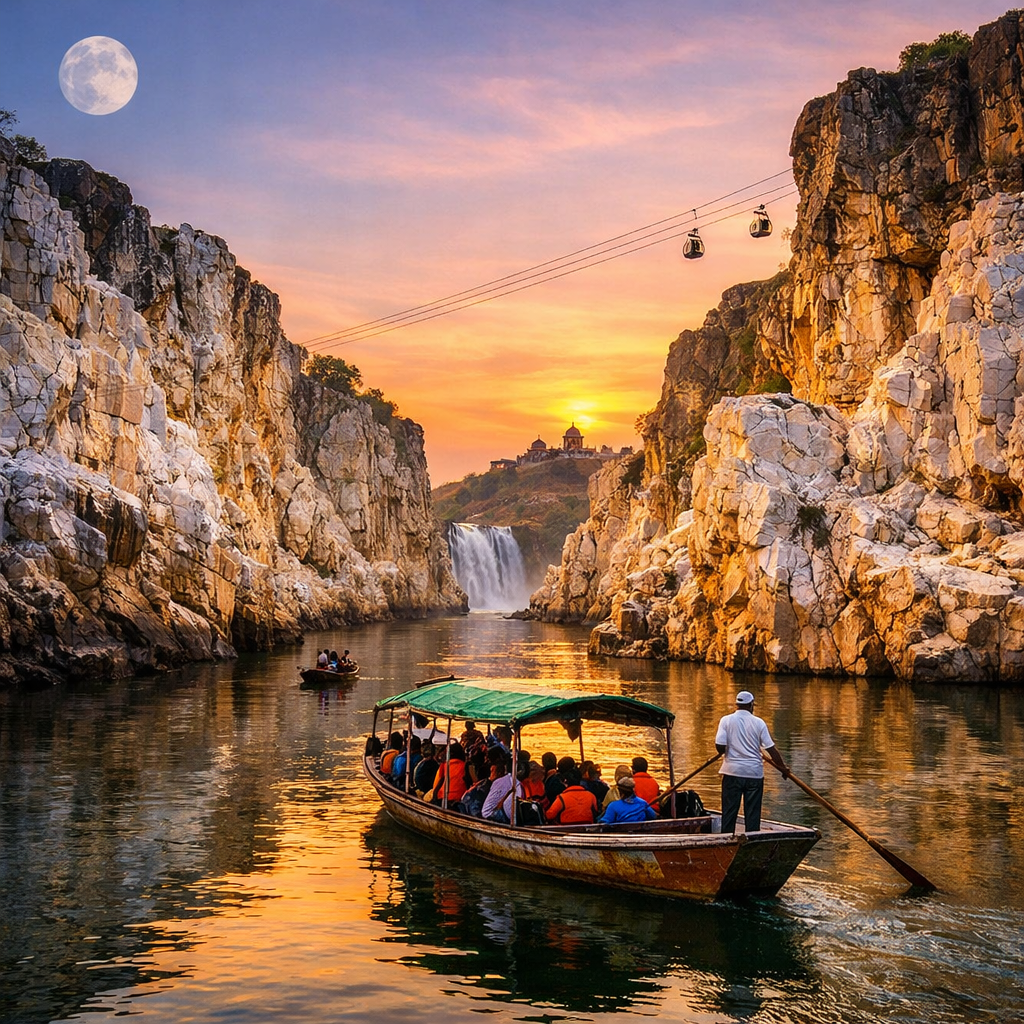
Boat Ride Timing (Bhedaghat side):
- Morning: 8:00 AM onwards
- Evening: Till sunset
- Note: Boat ride near falls may stop during strong currents
Seasonal Variations:
- Monsoon: Limited access near edges
- Winter: Full access + best visibility
Dhuandhar Falls Entry Fee & Ticket Prices 2026
Here’s a complete breakdown of Dhuandhar Falls entry fee 2026:
Entry & Parking:
- Entry Fee: Free
- Parking: ₹20–₹50 depending on vehicle
Ropeway Ticket Price:
- Adults: ₹150–₹200 (round trip)
- Children: ₹100 approx
Boat Ride (Nearby Marble Rocks):
- Shared Boat: ₹100–₹300 per person
- Private Boat: ₹1200–₹2500
Other Costs:
- Camera Fee: Usually free (DSLR may incur charges)
- Life Jacket: Included in boat rides
2026 Update: Digital ticket counters introduced for ropeway to reduce queues.
Best Season & Time to Visit Dhuandhar Falls in 2026
Choosing the best time to visit Dhuandhar Falls depends on what you want to experience.
Season Comparison
| Season | Experience | Pros | Cons |
|---|---|---|---|
| Monsoon (Jul–Sep) | Extremely powerful waterfall | Dramatic views, full force | Slippery, restricted access |
| Winter (Oct–Mar) | Balanced flow, clear views | Best photography, safe | Slightly crowded |
| Summer (Apr–Jun) | Reduced flow | Less crowd | Less impressive visuals |
Key Takeaways:
- Best season: October to February
- Best time of day: Sunrise or sunset
- For photographers: Winter evenings = golden light + mist
How to Reach Dhuandhar Falls
Getting to Dhuandhar Falls Jabalpur is easy in 2026:
From Jabalpur (25 km):
- By Cab/Taxi: 40–45 minutes
- By Auto: Budget option (shared available)
- By Bus: Local buses to Bhedaghat
2026 Update:
- Newly improved roads reduce travel time
- Better signage and parking facilities
Things to Do at Dhuandhar Falls & Nearby
A visit isn’t just about the waterfall—there’s plenty more.
Must-Do Experiences:
- Ropeway ride: Aerial view of the falls
- Viewpoints: Multiple angles for photos
- Boat ride at Marble Rocks: Just 1–2 km away
- Visit Chausath Yogini Temple for panoramic views
Nearby Attractions:
- Marble Rocks
- Hidden viewpoints near Bandar Kudni
- Fossil-rich Lamheta Ghat
Pro Insider Tips & Safety Advice for 2026
Want a next-level experience? Follow these:
Insider Tips:
- Visit before 8 AM for peaceful views
- Take ropeway one way, walk back for photos
- Best mist effect visible in early sunlight
- Try local chai near parking area
Safety Advice:
- Avoid slippery rocks during monsoon
- Stay within railings
- Keep electronics protected from water spray
- Travel in daylight for remote spots
What to Carry:
- Comfortable shoes
- Water bottle
- Light jacket (winter mornings)
- Waterproof phone cover
Suggested Itinerary: Half Day / Full Day at Dhuandhar Falls
Half-Day Plan:
- Early morning arrival
- Explore main viewpoints
- Ropeway ride
- Quick visit to Marble Rocks
Full-Day Plan:
- Sunrise at Dhuandhar Falls
- Ropeway + photography
- Boat ride at Marble Rocks
- Lunch in Bhedaghat
- Sunset revisit or temple visit
Conclusion
Dhuandhar Falls isn’t just a stop—it’s an experience that hits all your senses at once. The roar, the mist, the sheer power of nature—it stays with you long after you leave.
By understanding Dhuandhar Falls timing, choosing the right season, and following local tips, you can turn a simple visit into an unforgettable journey. With better infrastructure and safer viewing options in 2026, there’s never been a better time to explore this natural wonder.
So plan smart, go early, and let the Narmada show you its wildest side.
FAQ Section
1. What is the best time for Dhuandhar Falls boat ride?
Morning and evening during winter months offer the best experience.
2. Is Dhuandhar Falls open in monsoon?
Yes, but access may be restricted near the edge due to safety.
3. What are Dhuandhar Falls timing in 2026?
6:00 AM to 8:00 PM daily.
4. What is the ropeway ticket price at Dhuandhar Falls?
Around ₹150–₹200 for adults.
5. Is there an entry fee for Dhuandhar Falls?
No entry fee, only parking charges apply.
6. How far is Dhuandhar Falls from Jabalpur?
Approximately 25 km.
7. Which is better—monsoon or winter at Dhuandhar Falls?
Monsoon for power, winter for clarity and safe exploration.













Leave a Reply