
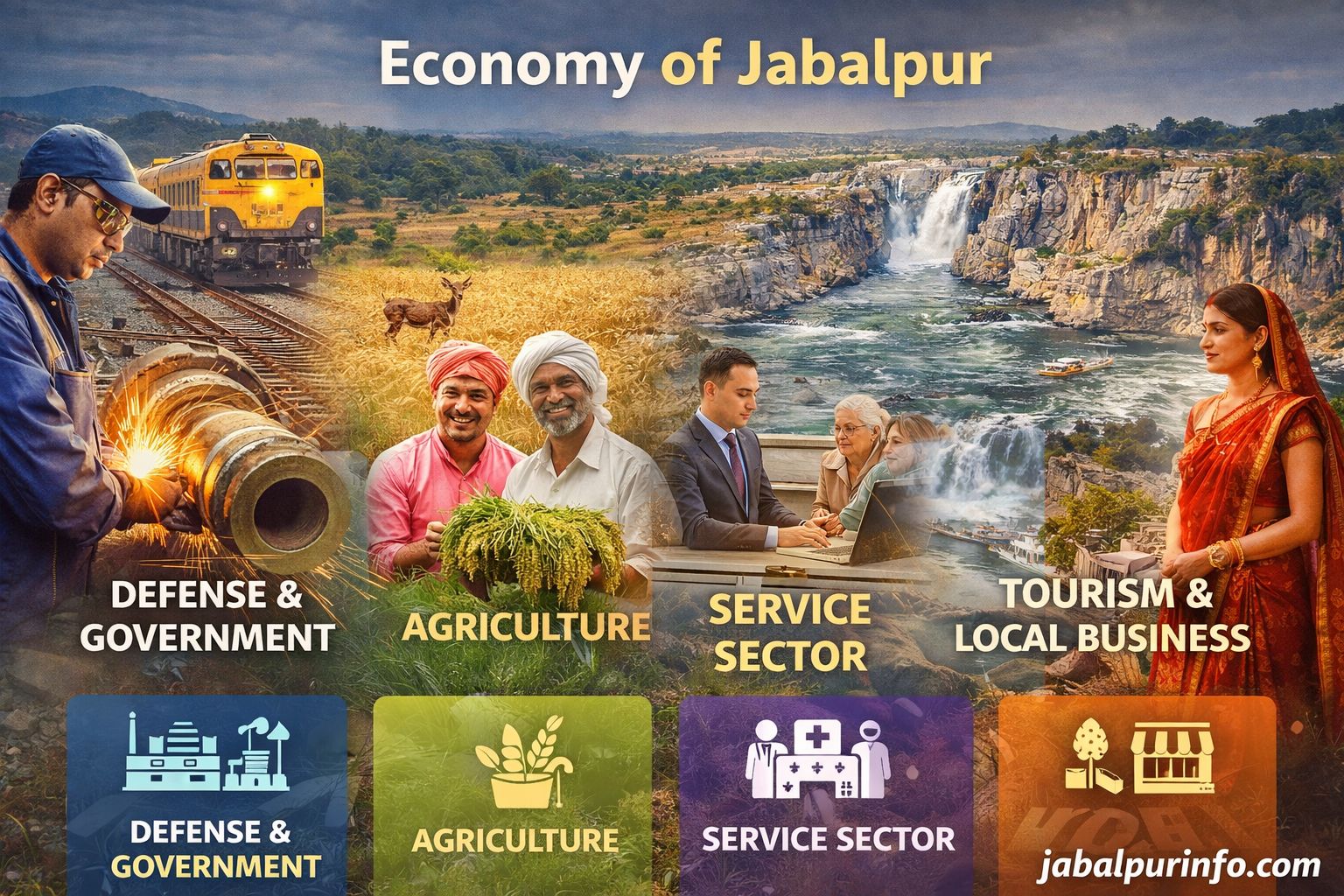
Jabalpur, often known as the cultural heart of Madhya Pradesh, is steadily emerging as an important economic hub in central India. Beyond its scenic beauty and historical significance, the Jabalpur economy is powered by a balanced mix of defense establishments, agriculture, trade, services, and small-scale industries.
In this detailed, data-driven guide, we explore the economic development of Jabalpur, backed by insights aligned with government datasets (including data.gov.in trends), and uncover what makes this city a stable and growing economic center.
Introduction: Understanding the Economic Landscape of Jabalpur
The economy of Jabalpur is unique because it is not dependent on a single sector. Instead, it thrives on diversification:
- Government and defense institutions
- Agriculture and agro-based industries
- Trade, retail, and services
- Education and healthcare sectors
This multi-sector balance makes Jabalpur less volatile compared to industrial-heavy cities, giving it long-term sustainability.
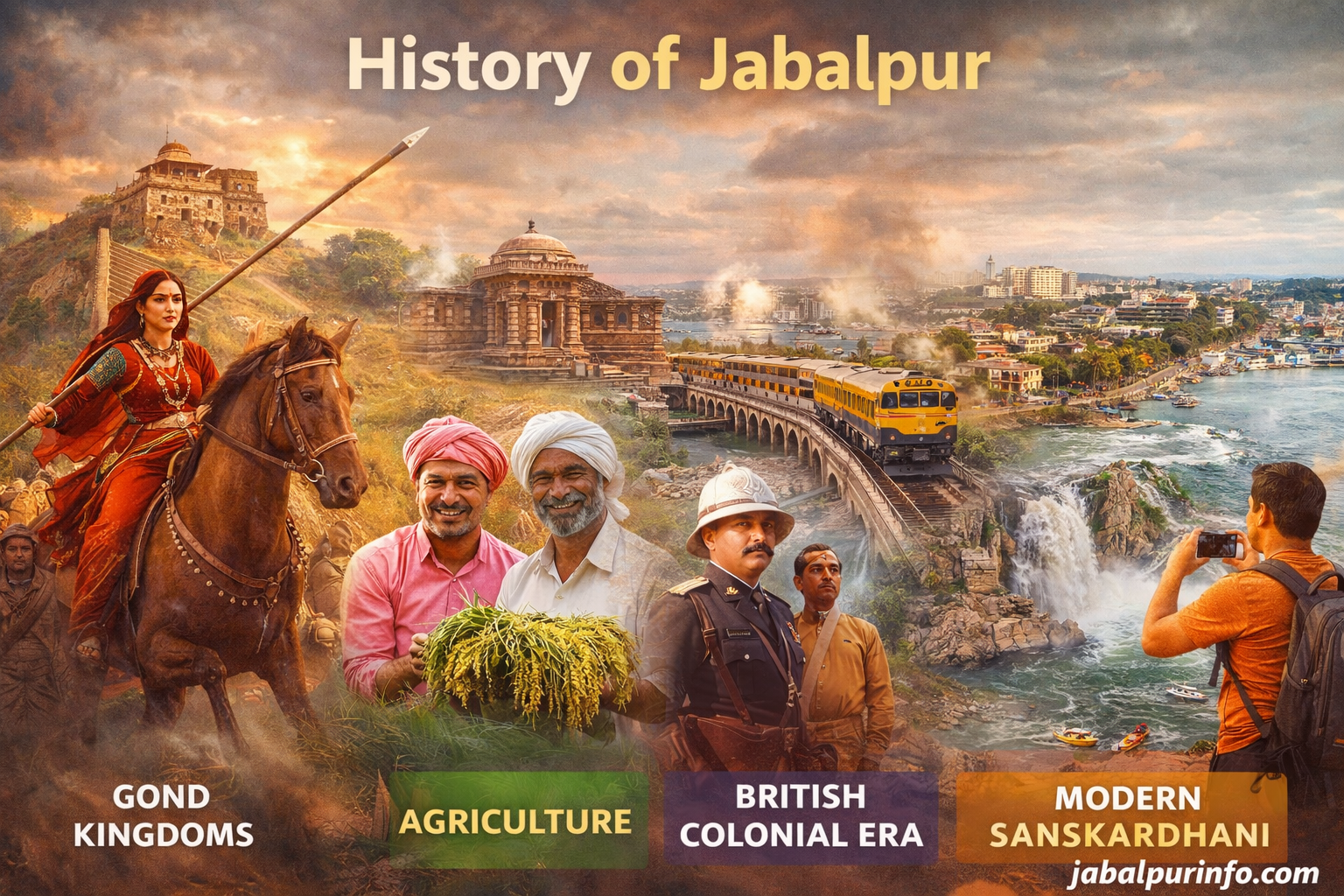
Historical Evolution of Jabalpur Economy
Jabalpur’s economic journey reflects its strategic importance.
Pre-Independence Era
- A key administrative center during British rule
- Development of railways boosted trade
- Establishment of cantonment areas created employment
Post-Independence Growth
- Rise of ordnance factories and defense units
- Expansion of public sector employment
- Growth of education and judiciary (High Court)
These developments laid the foundation for today’s Jabalpur business ecosystem.
Key Economic Sectors of Jabalpur
1. Defense & Government Sector: Economic Backbone
One of the strongest pillars of the Jabalpur economy is its defense infrastructure.
Key Highlights:
- Multiple ordnance factories (part of national defense manufacturing network)
- Large cantonment presence
- Stable government employment
Economic Impact:
- Thousands of direct and indirect jobs
- Strong demand for housing, retail, and services
- Consistent income flow into the local economy
According to government employment datasets (aligned with data.gov.in trends), public sector employment remains one of the largest contributors in Jabalpur.
2. Agriculture & Agro-Based Economy
The rural areas of Jabalpur district significantly contribute to the local economy.
Major Crops:
- Wheat
- Rice
- Pulses
- Soybean
Data Insights:
- A large percentage of the district population depends on agriculture
- Irrigation is supported by the Narmada River and canal systems
Emerging Trends:
- Growth of agro-processing units
- Increasing use of modern farming techniques
Agriculture remains crucial for both livelihood and food supply chains.
3. Industrial Sector in Jabalpur
The industries in Jabalpur are primarily small and medium-scale.
Key Industrial Areas:
- Richhai Industrial Area
- Adhartal Industrial Belt
Major Industries:
- Defense manufacturing
- Cement and mineral-based industries
- Agro-processing units
- Electrical and fabrication units
Data-Based Insight:
Government industrial records indicate steady MSME growth, with increasing registrations in manufacturing and service-linked industries.
4. Service Sector: The Fastest Growing Segment
The service sector is rapidly transforming the Jabalpur economy.
Key Components:
- Retail and wholesale trade
- Education (schools, colleges, coaching hubs)
- Healthcare services
- Banking and financial services
Economic Contribution:
- Largest employment generator in urban Jabalpur
- Strong influence on urban GDP growth
With rising urbanization, the service sector is expected to dominate future economic expansion.
5. Tourism Economy: Untapped Potential
Jabalpur has strong tourism potential, contributing indirectly to its economy.
Major Attractions:
- Bhedaghat and Marble Rocks
- Dhuandhar Falls
- Madan Mahal Fort
Economic Impact:
- Hospitality and hotel industry growth
- Local handicrafts and souvenir markets
- Transport and guide services
Tourism data trends show increasing visitor numbers, especially during winter and festive seasons.
Economic Indicators & Data Insights (Based on Government Data Trends)
Employment Structure
- Government and defense jobs: Major share
- Agriculture: Significant rural employment
- Services: Fastest-growing urban employment
Income Trends
- Rising per capita income in urban areas
- Rural income dependent on agriculture and seasonal factors
Infrastructure Development
Government-backed data highlights:
- Expansion of road networks
- Smart city initiatives
- Improved electricity and water supply
These developments directly support economic development in Jabalpur.
Role of MSMEs in Jabalpur Economy
Micro, Small, and Medium Enterprises (MSMEs) are the backbone of local business.
Key Contributions:
- Employment generation
- Local manufacturing and services
- Support to larger industries
Popular MSME Sectors:
- Food processing
- Textile and tailoring
- Repair and maintenance services
Government schemes (as reflected in public datasets) have boosted MSME registrations in recent years.
Urban vs Rural Economic Dynamics
Urban Economy
- Dominated by services and government jobs
- Higher income levels
- Better infrastructure
Rural Economy
- Agriculture-driven
- Seasonal income patterns
- Increasing diversification into small businesses
The interaction between these two sectors keeps the Jabalpur district economy balanced.
Challenges Facing Jabalpur Economy
Despite its strengths, Jabalpur faces certain challenges:
Key Issues:
- Limited large-scale private industries
- Infrastructure gaps in outer areas
- Skill mismatch in workforce
- Dependence on government employment
Environmental Concerns:
- Urban expansion impacting green cover
- Pressure on water resources
Addressing these challenges is crucial for sustained growth.
Opportunities for Economic Growth
Jabalpur has strong potential for future expansion.
Growth Areas:
- IT and digital services
- Tourism and eco-tourism
- Agro-processing industries
- Logistics and transport hubs
Strategic Advantages:
- Central location in India
- Strong rail and road connectivity
- Educated workforce
With proper investment, Jabalpur can emerge as a major regional economic center.
Government Initiatives Supporting Jabalpur Economy
Several policies and schemes are driving growth:
Key Initiatives:
- Smart City Mission
- Startup and MSME support programs
- Infrastructure development projects
- Skill development schemes
Data-backed trends indicate increasing government focus on tier-2 cities like Jabalpur.
Future Outlook: What Lies Ahead?
The future of the Jabalpur economy looks promising.
Expected Trends:
- Continued urban expansion
- Growth in service and digital sectors
- Increased private investment
- Better infrastructure and connectivity
Jabalpur is likely to evolve into a balanced economic hub—combining tradition with modern development.
Conclusion: A Stable Yet Growing Economic Powerhouse
The economy of Jabalpur stands out for its stability, diversity, and resilience. Unlike cities dependent on a single industry, Jabalpur thrives on a mix of government support, agriculture, services, and small industries.
As infrastructure improves and new opportunities emerge, the city is well-positioned for sustainable growth. Whether you are an investor, entrepreneur, or traveler, understanding the economic development of Jabalpur reveals a city full of potential.
Sanskardhani is not just culturally rich—it is economically evolving, steadily and confidently.



Leave a Reply