
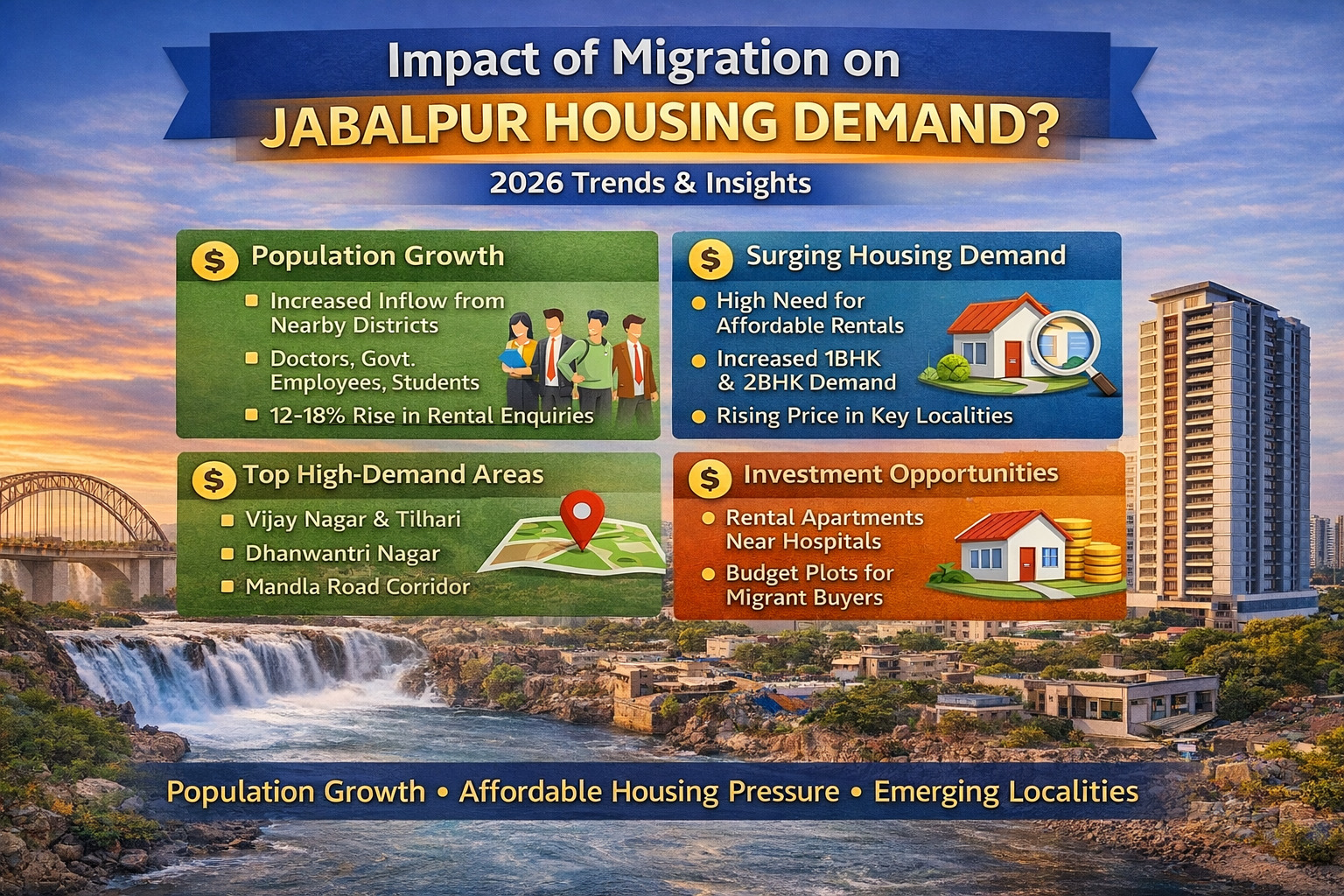
Impact of Migration on Jabalpur Housing Demand? 2026 Market Analysis
Introduction
The impact of migration on Jabalpur housing demand has become one of the most important real estate stories of 2026. While Jabalpur was traditionally seen as a stable administrative and defence city, migration from smaller towns, nearby districts, and select larger cities is reshaping local housing demand faster than many expected.
The direct answer: Yes, migration is significantly increasing housing demand in Jabalpur in 2026, especially in affordable rental homes, mid-income apartments, plotted developments, and areas close to employment hubs.
People are moving to Jabalpur for better education, healthcare jobs, government employment, defence-linked opportunities, lower living costs, and improved infrastructure under Smart City projects. This is creating both opportunity and pressure in the housing market.
For buyers, investors, and policymakers, understanding migration impact on Jabalpur real estate 2026 is now essential.
Migration Trends in Jabalpur: The 2026 Picture
Migration into Jabalpur is more diversified in 2026 than in previous years.
Current Movement Patterns
- Inflow from nearby districts such as Seoni, Mandla, Katni, Narsinghpur, and Balaghat.
- Students relocating for coaching, colleges, and technical education.
- Medical professionals and support staff attracted by healthcare expansion.
- Government and defence-related transfers continue to support stable demand.
- Small business owners shifting from smaller towns for better market access.
Estimated Market Effect
- Residential rental enquiries are estimated to be 12–18% higher than 2024 levels.
- Budget apartment demand has risen faster than premium demand.
- Shared rental accommodation has increased in institutional zones.
Why It Matters
Unlike speculative demand, migration-led demand is based on real occupancy needs, making it more sustainable.
Key Drivers of Migration to Jabalpur
Several structural factors explain why more people are choosing Jabalpur.
1. Employment Stability
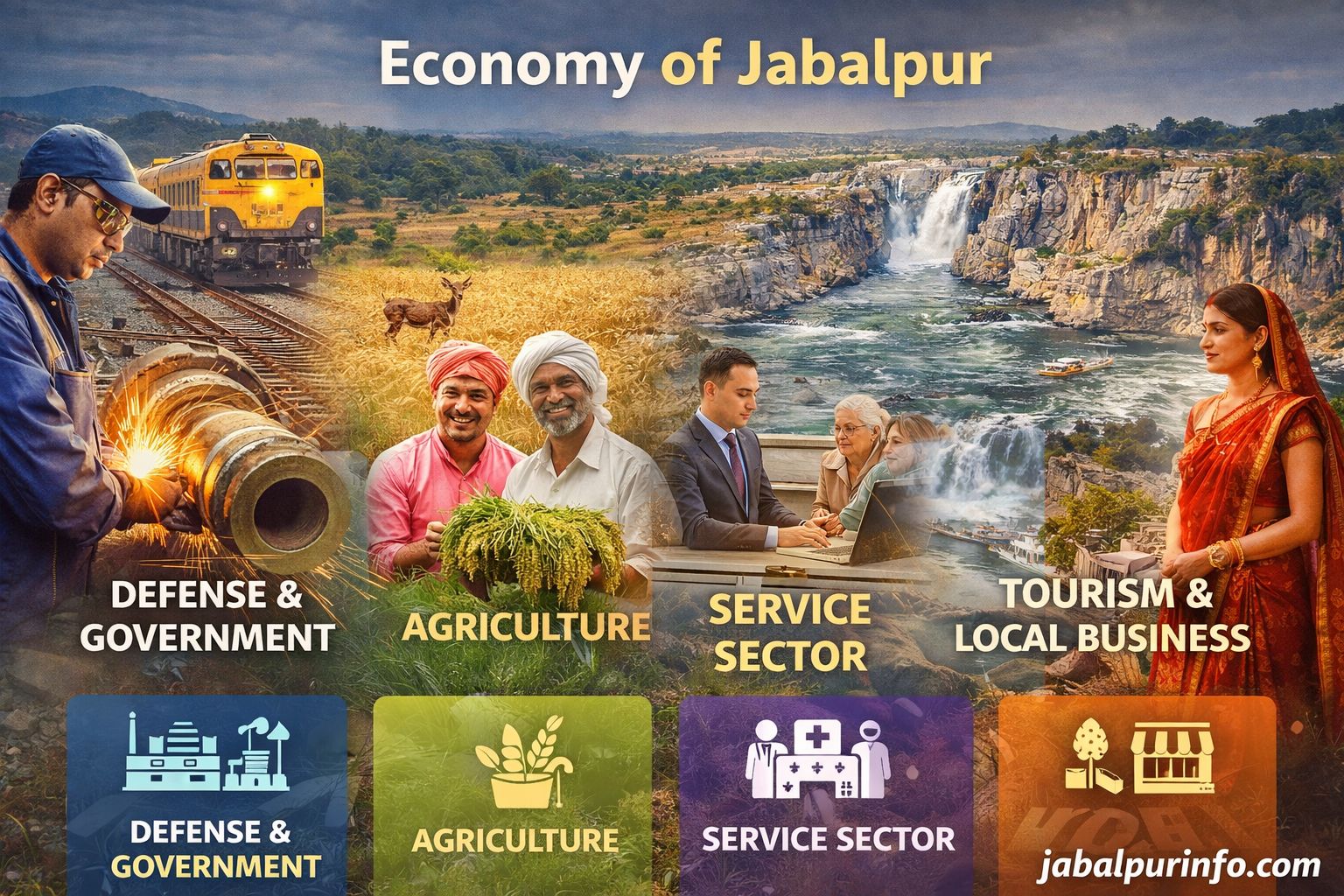
- Defence establishments
- Government departments
- Hospitals and private healthcare
- Retail and logistics growth
2. Education Ecosystem
- Universities and degree colleges
- Coaching institutes
- Professional training centers
3. Lower Cost of Living
Compared with Indore, Bhopal, or Nagpur, Jabalpur often offers lower rents and lower ownership costs.
4. Improved Urban Infrastructure
- Better roads
- Civic upgrades
- Digital services under Smart City plans
5. Lifestyle Appeal
- Manageable traffic compared with bigger cities
- Strong healthcare access
- Family-friendly neighborhoods
How Migration is Reshaping Housing Demand
The Jabalpur housing demand due to migration is changing what types of homes are needed.
Clear Demand Shifts
- Rising demand for 1 BHK and 2 BHK rental units
- Increased interest in compact affordable homes
- More demand for ready-to-move properties than under-construction projects
- Growing preference for gated communities among salaried migrants
- Shared housing demand near colleges and hospitals
Buyer Behavior Change
Migrants first rent, then many transition to ownership after 2–4 years of city settlement.
Key Insight
Migration is converting Jabalpur from a slower ownership market into a stronger rental-plus-ownership cycle.
Segment-Wise Impact on Residential Property Market
Different housing categories are responding differently.
Affordable Housing (₹15 lakh–₹40 lakh)
- Strongest demand segment in 2026
- Popular with first-time migrant families
- Peripheral localities seeing higher traction
Mid-Segment Housing (₹40 lakh–₹80 lakh)
- Favored by doctors, professionals, government officers
- Best-performing apartment category
Premium Housing (₹80 lakh+)
- Selective demand only
- Concentrated in established premium pockets
Rental Segment
- 1 BHK and 2 BHK units seeing quick absorption
- Furnished rentals gaining traction
Plot Market
- Migrants planning long-term settlement are buying land in growth corridors
Top Localities Facing Highest Housing Pressure from Migrants
These zones are seeing noticeable demand from incoming residents.
1. Vijay Nagar
- Strong retail ecosystem
- Popular for families and professionals
- Apartment demand remains high
2. Dhanwantri Nagar
- Driven by hospitals and medical staff
- Consistent rental absorption
3. Tilhari
- Premium apartment demand rising
- Better lifestyle appeal
4. Karmeta
- Affordable ownership zone
- First-home buyers entering here
5. Adhartal Belt
- Industrial and worker-linked demand
- Value housing segment active
6. Napier Town / Civil Lines
- Senior professionals and premium renters
7. Mandla Road Corridors
- Long-term plotted housing demand
Infrastructure & Government Response to Rising Demand
The city is adapting, though not evenly.
Major Responses
- Smart City roads and traffic upgrades
- Water and drainage improvements
- Public space redevelopment
- Better street lighting and digital systems
- Expansion toward outer residential zones
Why It Helps
As housing demand rises, infrastructure quality directly impacts which localities appreciate faster.
Important Trend
Areas connected by smoother roads are outperforming similarly priced but poorly linked neighborhoods.
Challenges: Supply Gaps, Price Inflation & Urban Strain
Growth also creates pressure points.
Key Challenges
- Rising rents in high-demand localities
- Shortage of quality affordable rental stock
- Congestion in older city pockets
- Water and parking stress in dense areas
- Price inflation in select micro-markets
2026 Price Impact
- Budget rental rates up an estimated 8–12% YoY in migrant-heavy zones
- Mid-segment resale prices up 6–10% in strong corridors
Urban Risk
If supply does not improve, affordability could weaken over the next few years.
Investment Opportunities Created by Migration-Driven Demand
Migration creates real, recurring demand—which investors value.
Best Opportunities
- 1 BHK / 2 BHK Rental Apartments near hospitals, colleges, offices
- Affordable Plots in growth corridors
- Resale Flats in established neighborhoods
- Co-living / Shared Rental Models for students and staff
Why This Works
Occupancy demand is stronger than speculative buying demand.
Smart Investor Strategy
Buy where migrants can realistically afford rent—not where brochure pricing looks glamorous.
How Jabalpur Compares with Other Tier-2 Cities
1. Jabalpur vs Indore
- Indore attracts larger corporate migration
- Jabalpur offers lower housing entry costs
2. Jabalpur vs Bhopal
- Bhopal benefits from capital-city status
- Jabalpur often has better affordability for ownership seekers
3. Jabalpur vs Nagpur Peripheral Markets
- Nagpur may offer larger industrial scale
- Jabalpur provides lower-ticket opportunities
Bottom Line
Jabalpur is not the fastest-growth city—but it is increasingly one of the most practical migration-led housing markets.
Future Outlook: Migration and Housing Demand 2027–2030
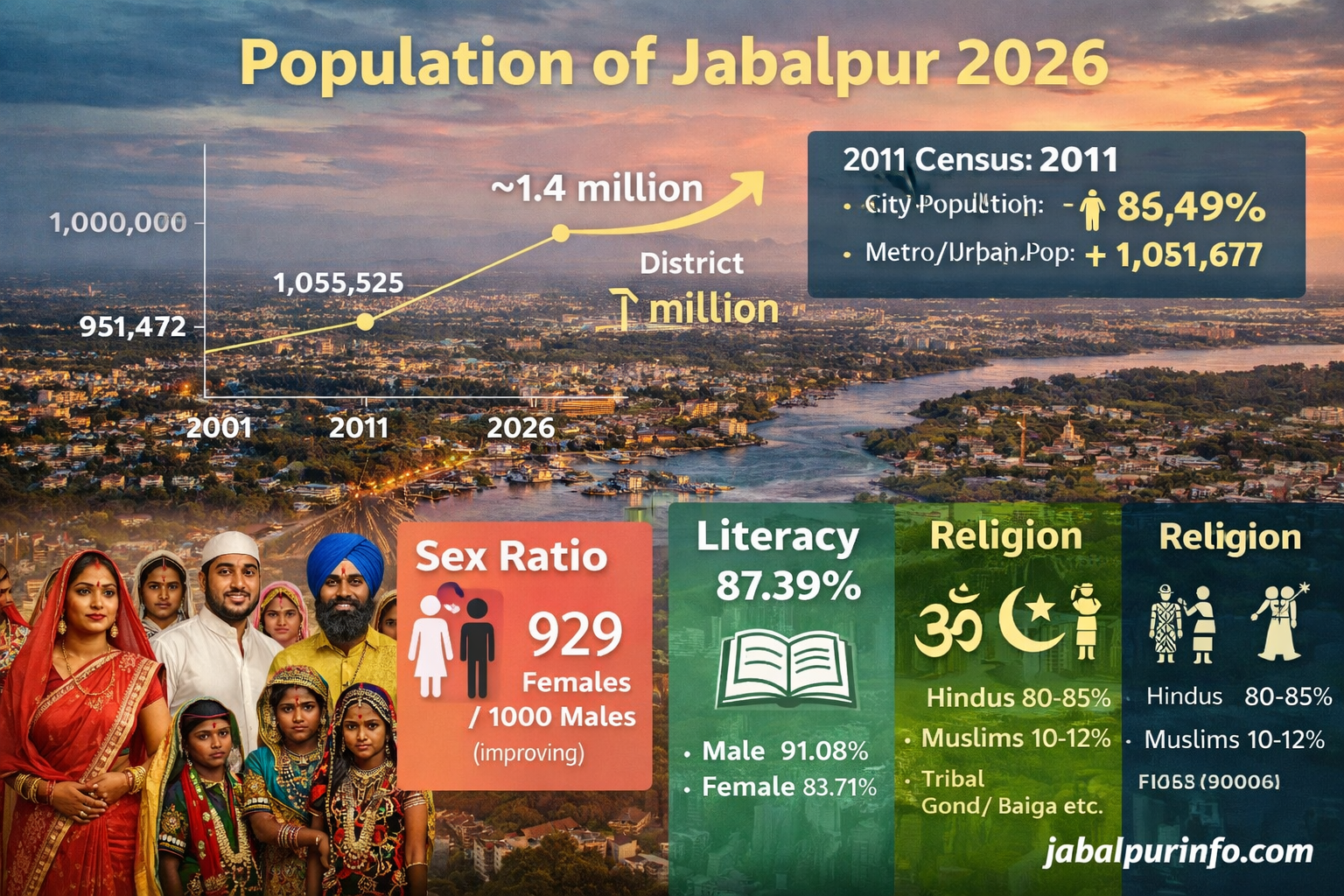
The Jabalpur population growth and property market link is likely to strengthen further.
What to Expect
- Continued rental demand growth
- More township and apartment launches
- Rising demand for organized affordable housing
- Appreciation in connected suburban corridors
- Stronger healthcare and education-driven housing demand
Forecast
Well-located mid-income housing may outperform luxury supply through 2030.
Conclusion & Actionable Insights for Buyers, Investors & Policymakers
The impact of migration on Jabalpur housing demand in 2026 is real, measurable, and growing. New residents are driving rental demand, affordable ownership demand, and expansion into emerging corridors.
Buyers
- Buy early in growth corridors before prices rise further.
- Prioritize connectivity and water reliability.
Investors
- Focus on 1 BHK / 2 BHK rental assets.
- Choose Vijay Nagar, Dhanwantri Nagar, Tilhari, and value corridors.
Policymakers
- Expand affordable housing stock.
- Improve transport and civic services in outer zones.
- Encourage planned development over unorganized sprawl.
Jabalpur’s next property cycle may not be driven by speculation—it may be driven by people choosing to live there.









Leave a Reply